
‘WEIRD’, A Free Range Journal – Issue No.1, Beltane 2020:
The Lockdown Edition
How do you talk about freeing ourselves from the gadgets that define our lives, when the way everyone communicates these days is defined by those gadgets?

Download this edition
1A4 PDF – for printing at A4 single- or double-sided; or
2A3 PDF – for printing landscape A3 double-sided to create a folded/stapled brochure.
‘WEIRD’ is designed to print at A4, but will reduce to A5 and be about the same size as small newsprint. The A3 PDF will scale for double-sided A4 landscape
Issue No.1 Contents:
- Introduction – A ‘WEIRD’ Introduction
- How do you talk about freeing ourselves from the gadgets that define our lives, when the way everyone communicates these days is defined by those gadgets?
- ‘Progress’ is not a copper-bottomed certainty
- Copper is an amazing metal!
- The problem is frozen oven-ready chips
- The economics of ‘fast’ food are not based upon the ingredients, but upon the business model of mass marketing via superstores. Creating a different way of living means confronting the absurdities of that system.
- History File – ‘Useful Work versus Useless Toil’
- Written by William Morris in 1888, this essay outlines how society reduces people to mere ‘occupiers’ of time in toil.
- The Elimination of Cash
- Cash has been in general use for 2,600 years. Now we're handing control to a handful of technology and finance companies. Think that’s a good idea?
- Demise of the Totnes Pound
- A realization that, when push comes to shove, everything that has a beginning has an end.
- We need big giggly land occupations, where people do nothing more than sit, cook food over fires, play acoustic music, and simply enjoy a more simple “disconnected” time together
- Consider this title both the introduction and the conclusion of this piece!
- ’Corona Virus’ versus ‘Universal Basic Income’ – Twin Failures of Modernity
- In the wake of the pandemic, as in the wake of the 2008 Crash, neoliberal capitalists have become socialists. However, does the great idea of the left, ‘Universal Basic Income’, represent anything better?
- Numerical Ramblings: Lockdowns, Pandemic Trends, and Political Reality
- A statistical editorial, presenting the trends relating infection, to death, to the current political messages on the pandemic – and what follows.
A ‘WEIRD’ Introduction
The idea of a newsletter providing an “alternative take” on the politics of technology – not out of ‘fear’, but by questioning technology’s relevance by understanding “how it works” – has been kicking around the FFree Range Network for some time. What has spurred us to getting-it-done isn’t the recent ‘corona-meltdown’ of social media, but the realities, or rather “externalities”, of ‘The Green New Deal’.
As we write this ‘first edition’: Global carbon emissions are falling; air pollution has fallen to levels not seen for many years; the consumer industry has ground to a halt; and noise levels have fallen across the developed world, in part because the roads and the skies are relatively empty.
And all this takes place while the offices of Greenpeace and Friends of the Earth are closed for business!
Are the events connected to the closure of the eco-campaign groups? Well, yes, and no:
As we write we are in the middle of Britain’s corona virus lock-down:
Around us the types of radical ecological change that we’ve dreamed of for years are taking place. That’s being achieved not by new technologies, but by the level of economic activity being slashed.
So why, at least for the last 30 years, has the mainstream environmental movement in Britain not demanded an economic contraction or ‘degrowth’ to stop eco-destruction?
Statistically most ‘environmentalists’ in Britain are ‘affluent’, ‘middle class’ members of “the 10%”; that tenth of the world’s population who emit half the greenhouse gas emissions. Consequently they don’t really want radical economic change, however much they might rail against the corporations that are destroying the planet.
Instead these ‘ecomodernists’ desire new technologies that will change the world without them having to change their entitlement to an affluent lifestyle.
Thing is, such gradualist, managerial methods of change can’t deliver the level of contraction required – because we’re already out of time to make those changes!
What the corona virus lockdown demonstrates is that there are “other options” which can achieve those same ends more quickly. That’s not a new debate; it’s actually been around for over 200 years.
This is what we intend to talk about in this publication…
“Science brings to the light of day everything man had believed sacred. Technology takes possession of it and enslaves it.”
Jacques Ellul, ‘The Technological Society’ (1954)
We’re not going to explain why we chose the name ‘WEIRD’ (you can work it out by looking-up the acronym). Practically this is still very much a ‘work in progress’, though its politics and philosophy are not.
We see this publication developing is as a place where older ‘deep ecological’ ideas and new ecological research meet. The radical ecological message that emerged in the 1950s, centred around technology and what it does both to us and the world around us, is far more relevant now than it ever has been. Of course you seldom hear that in the mainstream media, let alone from the environmental movement!
For information about this publication, and the Free Range Network, see the ‘About WEIRD’ page.
‘Progress’ is not a copper-bottomed certainty
Copper is an amazing metal!
It was the first metal produced and used by humans around 9,500 years ago; and ever since the scale of its use has mirrored the level of technological development of humanity generally.
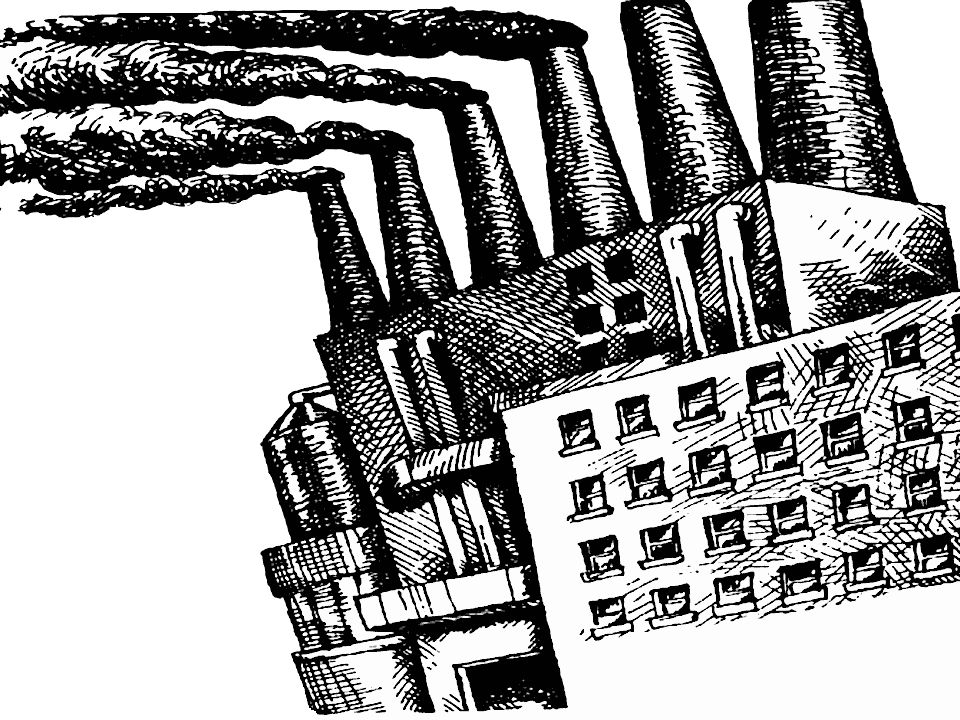
The Great Orm mines in North Wales supplied about 1,750 tonnes of copper over 1,500 years of operations to keep the Celtic Bronze Age in Britain going. Today one mine in Chile, Minera Escondida, produces twice that every day.
In March the operators of Chile’s copper mines dropped a bombshell. Output is falling: Ore grades are falling, which means more energy and resources are required to produce the same amount of copper; and water is running short, making operations harder to carry out.
Well before the corona virus lockdown collapsed demand, Codelco, the world’s largest producer, saw its production in 2019 fall to the lowest levels since the 2008 Crash.
To support copper production water may have to be brought from the coast to the Atacama desert – over 75 miles and 7,500 feet uphill – which further increases the ecological footprint of copper production.
Another major producer, Australia, is also seeing restrictions on copper production, as well as other metals essential to digital electronics, as the drought in eastern Australia continues.
The future for the orange metal is no longer clear:
300 years ago most copper went into pots and pans, and for sheeting to protect the bottoms of ships from worms.
By 100 years ago that had shifted into copper pipes and vessels for plumbing.
In the last 50 years the use of copper has shifted again into electronics. Copper is essential for digital electronics. E.g., 12% of the weight of a mobile phone is copper.
The future proposal that will massively amplify the world demand for copper is the ‘Green New Deal’. In order to shift to renewable power more copper cables are required, but applications such as electric cars or wind turbines also much much more copper than their preceding ‘dirty’ fossil-fuelled technologies.
Ultimately, in as little as a decade or two, we may see a peak in global copper production; after which, with production holding on a plateau for a decade or so, the availability of copper will begin to fall. Then what?
Unfortunately the projections for a clean, green, renewable electronic future cannot be assumed to be viable. E.g., like many others CAT’s ‘Zero Carbon Britain’ plan does not consider the availability of the resources to make the hardware required.
Until projections for future renewable energy start to consider their resource footprint, particularly copper, they cannot be considered realistic plans for future change.
The problem is frozen oven-ready chips
The economics of ‘fast’ food are not based upon the ingredients, but upon the business model of mass marketing via superstores. Creating a different way of living means confronting the absurdities of that system.
(The original version of this article by Paul Mobbs was published as ‘Lockdown and Liberation – A Study in Lifestyles and Systemic Resilience… and oven chips’, 16th April 2020)
“You can't build a house without nails and wood. If you don't want a house built, hide the nails and wood. If you don't want a man unhappy politically, don't give him two sides to a question to worry him; give him one. Better yet, give him none.”
Ray Bradbury, ‘Fahrenheit 451’ (1953)
The argument at the core of modernity is, “you’ve never had it so good”. The assumption is that the system works in everyone’s interests, so why would you possibly want to mess about with it?
A key part of making people ‘believe’ in that system is getting them to accept that alternatives are impossible – or that any problems we have today just need more “technological innovation” to solve.
Food is an essential part of people’s everyday lives, whether they choose to acknowledge that or not. It’s the cheap and ubiquitous nature of food in Western society that is at the heart of modernity’s “unique selling proposition”. That same food system, however, is also at the heart of both the exploitative and ecologically damaging nature of technological progress, and the damage that it does to those who must live within it.
So let’s do without! Let’s find an alternative to the supermarkets and their damaging supply chains, and look for something more local and benign:
From the Soil Association, to Transition Towns, to permaculture, that’s the mainstream middle class’ response to the ‘problem’ of food. And for the last 40 years the ways that message has been enacted through the mainstream market have arguably made the situation worse – and have not allowed an appreciable number of people to ‘escape’ that system.
The reason these ideas don’t catch-on at the larger scale is often reduced, most notably by their critics, to one relatively simple factor: price.
Put simply, the middle class alternatives to avoid participation in modernity’s market system cost more, and thus are beyond the ability of most people to acquire.
The deeper reality though is more psychological and biochemical – again, the result of how that big system of food production, technological processing, and branding, function. To examine this contradiction I believe there is one iconic product we can hold-up: oven-ready chips.
“The food industry’s playbook is familiar from the strategies of tobacco and climate-change denial over the past four decades. It relies on repeated use of the same set of techniques: Cast doubt on unhelpful science; fund more favourable, skewed science; and use front groups posing as independent institutes. Finally, promote personal responsibility and self regulation rather than government intervention; capture advisory committees; and challenge regulation in court.”
Felicity Lawrence, ‘Rotten meat and bottled formaldehyde’ (Nature, October 2018)
In contrast to the arguments made against ‘green consumerism’, the economics of oven ready chips are far more complex – and revealing – than, “they’re cheaper”. It embodies the characteristics of the domination of society by concentrated financial & technological interests.
Instant chips are arguably sold at a loss so that when people come into the superstore and buy them, they will almost certainly leave with the more expensive bags of instant vegetables and protein located next to them in the aisle.
The technological ‘design’ of frozen chips is also significant. Modern fast food creates a demonstrably addictive attachment to consuming it by hitting the chemical receptors – on our tongue, and in our stomach and brain – with four compounds: fat, salt, sugar, and protein.
Nearly all brands of instant chip use some form of coating on the outside. This doesn’t just aid quick preparation, it also creates an intense flavour or biochemical hit which is what ultimately ensures people keep coming back for more. The research and manufacture of coatings for fast food is a valuable industry, not only because it affects the quality or longevity of foods, but because it can have major consequences on people’s eating habits.
The coatings are based around various compounds, many of which include sodium caseinate (aka. ‘E469’), which mimics the protein casein that is found in large quantities in milk and cheese. As a very cheap dairy ‘waste’ product, manufacturers of lower quality chips may use whey powder from cheese processing. That has implication for the food’s nutritional quality, which is why other manufacturers prefer to use the more expensive chemical alternatives.
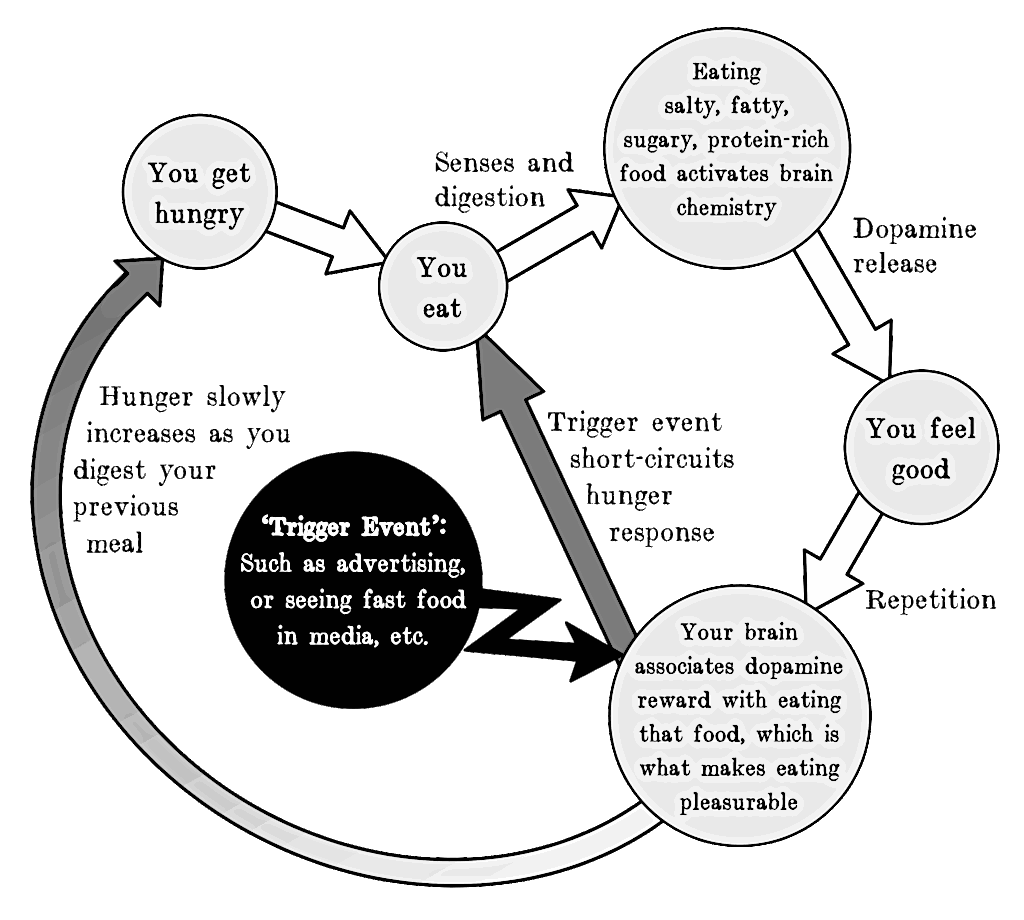
The effect of this protein-rich coating is to turn-on the brain’s chemical receptors, and as a result – just like other forms of addictive behavioural responses – this leads to a release of dopamine in the brain which makes you feel warm and happy.
This design trend has become so widespread in relation to processed foods that, in 2008, psychologists at Yale University were able to compile a “Food Addiction Scale”. This relates certain food products to their propensity to create dependency, and the problems – such as binge eating – which people experience when they are put under stress. Not least, the stress of trying to manage addiction to unhealthy highly-processed foods.
Other compounds which have a similar effect are fats and sugars. E.g. a raw potato is bland or floury. That’s starch. Take a potato and roast or deep fry it and the starch’s chemical structure changes, becoming sugar-like and sweeter – and so more appetizing.
Some brands of oven-ready chip are not made from whole potatoes at all. Instead they use potato processing spoil/waste that’s moulded into chips, shaped fries, or waffles.
Either way, another factor in processing the food is that it removes dietary fibre and breaks down the complex carbohydrates – by taking away the skin, or degrading the structure of the food with heat or mechanical processing. This creates “baby food for adults” as it digests far faster, increasing the ‘hit’ of carbs and fats.
E.g., to make a loaf of spongy white bread in an hour the ‘Chorleywood Process’ uses a large amount of mechanical energy – to beat the dough before the yeast is added – which means the yeast break-down the carbohydrates in a few tens of minutes rather than hours.
In the same way as the Chorleywood Process works for yeast, ‘hyperprocessed food’ also makes the compounds which turn-on the lights in your brain easily digestible, and thus more quickly available in your bloodstream. The result is rather like the coating on the chips – it enhances the hit your brain takes when you eat the food.
At the same time hyperprocessed food also messes-up your body’s blood sugar, fat, and insulin balance, promoting weight gain and diabetes.
Practically though it is not the food alone which makes the ‘product’ so compelling – and keeps people coming back for more (see diagram above).
The biochemical effect food creates can easily become habituated. What is more critical though is the role of environmental cues which create a ‘trigger event’ – making your brain crave the dopamine response, and as a result making the foods which generate that response addictive.
The ‘Own-Made’ Oven Chip
Messing with your own brain chemistry cheaply at home? What’s not to like?
To make your own root veg coating (this works just as well on parsnips and turnips as it does spuds) is very cheap and simple:
- Take a good quality oil stable at high temperature – such as sunflower, rapeseed or olive – and put a small amount in the bottom of a large bowl or saucepan, a few millimetres/a tenth in an inch deep;
- Add some seasoning to the taste that suits you – that could just be some salt and pepper, but you could use herbs, or spices, or whisk in some vinegar for something more tangy;
- If you want something more crispy, add a little gram flour (nutritionally far better for you) or cornflour and mix thoroughly to thicken the oil slightly;
- Prepare you veg – whether you take off the skin is up to you and the quality of veg you have available – and you can leave them whole or slice them into thin strips or carve funny shapes;
- Drop the veg into the seasoned oil and stir until everything’s evenly coated;
- Take the veg out a handful at a time, draining any excess oil, and place on a baking tray – theoretically you could then freeze this and then remove from the tray and bag for later use;
- Cook until soft and brown – cooking longer on a cooler temperature, such as 170°C/gas mark 4 or 190°C/gas mark 5 will sweeten the starches compared to cooking quickly on a high heat (cooking over 205°C/gas mark 6 will burn the oil, leaving a bitter taste).

Put simply, it’s not that frozen oven-ready chips are addictive; the critical factor is the context in which they are sold:
It is making fast food low cost and easily accessible; as well as bashing out the general noise of advertizing and branding; which triggers people to crave more; that creates the money-spinning industry which pays for ‘loss-leading’ products like chips.
For thirty years I’ve been researching how to live more simply. A key part of that is bulk buying, and using “own-made” alternatives to avoid the higher costs of ready meals and processed foods that most other households rely upon.
In all that time though there has been one product which has eluded my efforts at significantly cheaper replication: those totemic bags of oven-ready chips.
Yes, I can make something similar (see the box, right), but I usually make “shop like” products for a half to a quarter of their ready-meal/frozen equivalents. For oven chips though I can barely do it at a lower price than a bag from the shop.
The main issue here is the cost of the spuds (or other root veg): Loose or large bags of spuds range from 50p (Morrisons) to £1.16 (Waitrose) per kilo; oven ready chips by comparison are 83p (Mor.) to £1.34 (Wai.) per kilo; and by comparison the local chip shop is £7.50/kilo, and a McDonalds ‘medium’ fries £10/kg!
It used to be possible to buy 25 kilo bags of spuds from independent shops, for perhaps as little as 20p per kilo – but that’s getting difficult to do as so many small shops and greengrocers have been put out of business by the large foods chains.
If I had access to land, no problem, but the small house in where I live does not have a large plot of land attached to grow food. The average cost of an allotment is around £40/year, if you can get one. And despite their recent resurgence in popularity, local authorities and public bodies are still selling off allotments to raise cash.
For me, this is why over-ready chips are a totemic product: They are emblematic of how agribusiness controls our diet, with unhealthy products which create dependency – and despite the evidence of how the exploitation of biochemistry underpins it, no government seems to be willing to take the industry on.
More importantly though they represents a system of economics which is predatory, making any alternative option more difficult to sustain. As our access to land diminishes, and the ability to produce our own food that brings, the economics of chips shows how this system – despite its homely advertizing – is becoming a singularly exploitative economic process.
History File: ‘Useful Work versus Useless Toil’
Written by William Morris in 1888, this essay outlines how society reduces people to mere ‘occupiers’ of time in toil. This is a short extract from the full work to show that – 130 years before modern-day writers came up with the concept of “bullshit jobs” – people were observing and writing about exactly the same thing.
(The original version of this article is available here.)
“The above title may strike some of my readers as strange. It is assumed by most people nowadays that all work is useful, and by most well-to-do people that all work is desirable.
Most people, well-to-do or not, believe that, even when a man is doing work which appears to be useless, he is earning his livelihood by it – he is ‘employed,’ as the phrase goes; and most of those who are well-to-do cheer on the happy worker with congratulations and praises, if he is only ‘industrious’ enough and deprives himself of all pleasure and holidays in the sacred cause of labour.
In short, it has become an article of the creed of modern morality that all labour is good in itself – a convenient belief to those who live on the labour of others. But as to those on whom they live, I recommend them not to take it on trust, but to look into the matter a little deeper.
Let us grant, first, that the race of man must either labour or perish. Nature does not give us our livelihood gratis; we must win it by toil of some sort of degree…
And, yet, we must say in the teeth of the hypocritical praise of all labour, whatsoever it may be, of which I have made mention, that there is some labour which is so far from being a blessing that it is a curse; that it would be better for the community and for the worker if the latter were to fold his hands and refuse to work, and either die or let us pack him off to the workhouse or prison.
Here, you see, are two kinds of work – one good, the other bad; one not far removed from a blessing, a lightening of life; the other a mere curse, a burden to life.
What is the difference between them, then? This: one has hope in it, the other has not…
I have said that Nature compels us to work for that. It remains for us to look to it that we do really produce something, and not nothing, or at least nothing that we want or are allowed to use. If we look to this and use our wills we shall, so far, be better than machines…
It is clear that this inequality presses heavily upon the ‘working" class, and must visibly tend to destroy their hope of rest at least, and so, in that particular, make them worse off than mere beasts of the field; but that is not the sum and end of our folly of turning useful work into useless toil, but only the beginning of it.
For first, as to the class of rich people doing no work, we all know that they consume a great deal while they produce nothing. Therefore, clearly, they have to be kept at the expense of those who do work, just as paupers have, and are a mere burden on the community…
As to the middle class, including the trading, manufacturing, and professional people of our society, they do, as a rule, seem to work quite hard enough, and so at first sight might be thought to help the community, and not burden it. But by far the greater part of them, though they work, do not produce, and even when they do produce, as in the case of those engaged (wastefully indeed) in the distribution of goods, or doctors, or (genuine) artists and literary men, they consume out of all proportion to their due share.
The commercial and manufacturing part of them, the most powerful part, spent their lives and energies in fighting amongst themselves for their respective shares of the wealth which they force the genuine workers to provide for them; the others are almost wholly the hangers-on of these; they do not work for the public, but a privileged class: they are the parasites of property, sometimes, as in the case of lawyers, undisguisedly so; sometimes, as the doctors and others above mentioned, professing to be useful, but too often of no use save as supporters of the system of folly, fraud, and tyranny of which they form a part.
And all these we must remember have, as a rule, one aim in view; not the production of utilities, but the gaining of a position either for themselves or their children in which they will not have to work at all. It is their ambition and the end of their whole lives to gain, if not for themselves yet at least for their children, the proud position of being obvious burdens on the community…
Next there is the mass of people employed in making all those articles of folly and luxury, the demand for which is the outcome of the existence of the rich non-producing classes; things which people leading a manly and uncorrupted life would not ask for or dream of. These things, whoever may gainsay me, I will for ever refuse to call wealth: they are not wealth, but waste.
“For a list of all the ways technology has failed to improve the quality of life, please press 3.”
Alice Kahn
Wealth is what Nature gives us and what a reasonable man can make out of the gifts of Nature for his reasonable use. The sunlight, the fresh air, the unspoiled face of the earth, food, raiment and housing necessary and decent; the storing up of knowledge of all kinds, and the power of disseminating it; means of free communication between man and man; works of art, the beauty which man creates when he is most a man, most aspiring and thoughtful – all things which serve the pleasure of people, free, manly, and uncorrupted. This is wealth. Nor can I think of anything worth having which does not come under one or other of these heads…
Now, further, there is even a sadder industry yet, which is forced on many, very many, of our workers – the making of wares which are necessary to them and their brethren, because they are an inferior class. For if many men live without producing, nay, must live lives so empty and foolish that they force a great part of the workers to produce wares which no one needs, not even the rich, it follows that most men must be poor; and, living as they do on wages from those whom they support, cannot get for their use the goods which men naturally desire, but must put up with miserable makeshifts for them, with coarse food that does not nourish, with rotten raiment which does not shelter, with wretched houses which may well make a town-dweller in civilization look back with regret to the tent of the nomad tribe, or the cave of the prehistoric savage.
Nay, the workers must even lend a hand to the great industrial invention of the age – adulteration, and by its help produce for their own use shams and mockeries of the luxury of the rich; for the wage-earners must always live as the wage-payers bid them, and their very habits of life are forced on them by their masters.
But it is waste of time to try to express in words due contempt of the productions of the much-praised cheapness of our epoch. It must be enough to say that this cheapness is necessary to the system of exploiting on which modern manufacture rests. In other words, our society includes a great mass of slaves, who must be fed, clothed, housed and amused as slaves, and that their daily necessity compels them to make the slave-wares whose use is the perpetuation of their slavery.
To sum up, then, concerning the manner of work in civilized States, these States are composed of three classes – a class which does not even pretend to work, a class which pretends to works but which produces nothing, and a class which works, but is compelled by the other two classes to do work which is often unproductive.
Civilization therefore wastes its own resources, and will do so as long as the present system lasts. These are cold words with which to describe the tyranny under which we suffer; try then to consider what they mean…
Looking backwards to the time when history first began, we note that the progress of that victory has been far swifter and more startling within the last two hundred years than ever before. Surely, therefore, we moderns ought to be in all ways vastly better off than any who have gone before us. Surely we ought, one and all of us, to be wealthy, to be well furnished with the good things which our victory over Nature has won for us.
But what is the real fact? Who will dare to deny that the great mass of civilized men are poor? So poor are they that it is mere childishness troubling ourselves to discuss whether perhaps they are in some ways a little better off than their forefathers.
They are poor; nor can their poverty be measured by the poverty of a resourceless savage, for he knows of nothing else than his poverty; that he should be cold, hungry, houseless, dirty, ignorant, all that is to him as natural as that he should have a skin. But for us, for the most of us, civilization has bred desires which she forbids us to satisfy, and so is not merely a niggard but a torturer also.
Thus then have the fruits of our victory over Nature been stolen from us, thus has compulsion by Nature to labour in hope of rest, gain, and pleasure been turned into compulsion by man to labour in hope – of living to labour!…
When this first step has been taken and men begin to understand that Nature wills all men either to work or starve, and when they are no longer such fools as to allow some the alternative of stealing, when this happy day is come, we shall then be relieved from the tax of waste, and consequently shall find that we have, as aforesaid, a mass of labour-power available, which will enable us to live as we please within reasonable limits. We shall no longer be hurried and driven by the fear of starvation, which at present presses no less on the greater part of men in civilized communities than it does on mere savages.
The first and most obvious necessities will be so easily provided for in a community in which there is no waste of labour, that we shall have time to look round and consider what we really do want, that can be obtained without over-taxing our energies; for the often-expressed fear of mere idleness falling upon us when the force supplied by the present hierarchy of compulsion is withdrawn, is a fear which is but generated by the burden of excessive and repulsive labour, which we most of us have to bear at present…
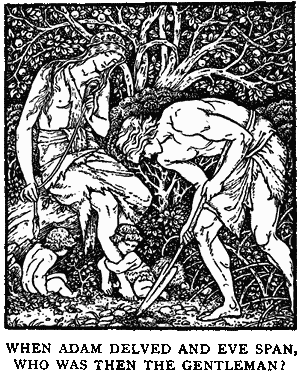
(an illustration by William Morris)
Our epoch has invented machines which would have appeared wild dreams to the men of past ages, and of those machines we have as yet made no use.
They are called ‘labour-saving’ machines – a commonly used phrase which implies what we expect of them; but we do not get what we expect. What they really do is to reduce the skilled labourer to the ranks of the unskilled, to increase the number of the ‘reserve army of labour’ – that is, to increase the precariousness of life among the workers and to intensify the labour of those who serve the machines (as slaves their masters).
All this they do by the way, while the pile up the profits of the employers of labour, or force them to expend those profits in bitter commercial war with each other.
In a true society these miracles of ingenuity would be for the first time used for minimizing the amount of time spent in unattractive labour, which by their means might be so reduced as to be but a very light burden on each individual. All the more as these machines would most certainly be very much improved when it was no longer a question as to whether their improvement would ‘pay’ the individual, but rather whether it would benefit the community…
Again, as people freed from the daily terror of starvation find out what they really wanted, being no longer compelled by anything but their own needs, they would refuse to produce the mere inanities which are now called luxuries, or the poison and trash now called cheap wares. No one would make plush breeches when there were no flunkies to wear them, nor would anybody waste his time over making oleo-margarine when no one was compelled to abstain from real butter. Adulteration laws are only needed in a society of thieves – and in such a society they are a dead letter…
Once more I say, that for a man to be the whole of his life hopelessly engaged in performing one repulsive and never-ending task, is an arrangement fit enough for the hell imagined by theologians, but scarcely fit for any other form of society.”
The Elimination of Cash
Cash has been in general use for 2,600 years. Now we're handing control to a handful of technology and finance companies. Think that’s a good idea?
According to that famous apocryphal quote which appears to have been manufactured by PR writers in the early 1970s for Earth Day,

“When the last tree has been cut down, the last fish caught, the last river poisoned, only then will we realize that one cannot eat money.”
What if, however, the money disappeared way before the trees?
‘Cash’, in terms of stuff which represents a common value and can be traded, has been around since silver and gold alloy bars were first exchanged around the Black Sea 2,600 years ago. Today though there is a concerted effort to get rid of cash in favour of fully electronic payments for goods and services.
There have been many reasons advanced for this; many conspiratorial. Arguably though, apart from the purely financial, there is a deep ideological element relating to how contemporary neoliberal economists view the future for state finance.
Whether it be “financial technology” (a.k.a. “fintech”) taking control of the banking, or new economic theories for how money works, one thing is certain: ordinary people will be severely disadvantaged by the end of cash, especially if they have little of it to use today.
The modern concept of cashless payments has little to do with the concept of the ‘credit card’, developed in the 1960s off the back of new digital computer networks. Britain has a unique history here:
The first “automated teller machine” (ATM) was launched in London in 1967; in 1972 Lloyds Bank started issuing cards carrying magnetic strips with account information; and in the mid-2000s contactless payments were pioneered by Visa & Barclays.
To get a card then someone not only had to have a bank account, but, in the days before liberalized credit, a very sound financial history too. Then the liberalization of credit in the late 1980s opened up banking services to a wider range of companies, allowing the growth of credit and store cards.
All the above has emerged from the banking industry as a means of facilitating payments. The more revolutionary idea of the ‘cashless society’ is driven primarily by Internet and mobile phones operators, and their digital collaborators.
“Monopoly is the condition of every successful business.”
Peter Thiel, ‘Zero to One: Notes on Startups, or How to Build the Future’ (2014)
In 1998 a Ukrainian-born programmer, Max Levchin, met venture capitalist Peter Thiel at a Stanford University lecture. The idea they launched became ‘PayPal’, the single most critical application which kicked-off the modern-day, on-line, cashless electronic economy.
Very simply PayPal – which was not a bank, but a Silicon Valley technology company – enabled a payment to be made between two people on-line. That system would enable first eBay, the on-line auction sites, and then Amazon, iTunes, and the many more on-line ‘platforms’ which form the core of today’s e-commerce system.
PayPal was bought by eBay for $1.5 billion in 2002. One of the reasons they were happy to sell was that central banks were applying pressure on the technology company to become a formal, legal banking corporation – which they were unwilling to do.
That huge payoff would enable what has been called the “PayPal mafia” to fund or guide many other companies that dominate the on-line world – such as LinkedIn, Youtube, Facebook, and Flickr.
Elon Musk’s fortune was based in part on the PayPal deal.
Most notably, Peter Thiel went on to found Palantir Technologies, the leading data analytics company – which now specializes in intelligence work for the US Dept. of Defence and other nation states (more generally, see his quote below).
PayPal charged a 3% transaction fee. This is what made the company worth so much. 3% on millions of small transactions creates a large income. That model is at the heart of other ‘platforms’ – such as Amazon, Apple, Google, Alibaba, and Facebook – which form the core of the Internet.
On-line platforms create a space where other smaller organizations can run businesses – using the platform to provide the accounting, transaction, and communications system. Of course the platform can take a small cut of all those many transactions for providing those services, which is what makes the shares of those companies worth so much.
What truly revolutionized that initial computer-based system was the smartphone – beginning with the Apple iPhone in 2007. It wasn’t just that people could carry a mobile computer with them wherever they went. What the smartphone revolution created was a mass of data about people and their routine, everyday activities that were monitored and stored by that computer.
What platforms specialize in is ‘apps’ – applications. Companies using the platform can write their own computer code which sits in the user’s phone, managing communications through the platform.
At the same time though all those apps collect data about their users – and that data is in many cases as valuable as the service the company provides.
This is the system now called ‘surveillance capitalism’; a digital space where the people using apps or platforms are not the ‘customer’, they are the ‘product’. The ‘customers’ are the corporations, advertizers, PR agencies, and increasingly states and intelligence agencies who buy all the data the platforms and apps produce to enable their own field of commercial work.
Data has been called the “new oil”; it’s valuable, and there’s a lot of money to be made from trading it. In fact, in 2017, The Economist magazine ran an article outlining how the leading on-line platforms were now worth more, and were more profitable, than the world’s largest oil & gas companies.
If data is ‘oil,’ then the absolute best and most valuable of that new ‘oil’ is payments data – the information created every time you spend money, or make electronic payments, or shop for goods on-line. That’s because it reliably identifies the user, but also provides lots of details about what they were spending money on.
Just as data has been the money-spinner for platforms, payments data has become the value at the heart of another technologically-enabled system – ‘financial technology’, or “fintech”.
PayPal wasn’t a bank – and it was the pressure to become one which spoiled the adventure for the original founders of that company.
What happened in the early 2000s, and especially after the 2008 Crash, was that people who were experienced in banking started to get into on-line platforms to provide fully-fledged banking services. Originally that was for corporate and ‘high net worth’ customers.
In the last decade though ‘fintech’ has started to put pressure on High Street banks. That in turn has made the banking sector play ‘catch-up’ with the types of electronic services which allows fintech to operate more cheaply on-line.
Why is your bank pressuring you to go on-line and closing local branches? It’s the competition from fintech – not so much directly, but through investors and speculators demanding that traditional banks adopt the same practices as fintech to increase profits.
Driving this trend is the money to be made by the ‘middle-men’ in the new cashless economy chain.
Originally implemented to reduce the costs of fraud to the banks, ‘Chip & Pin’ sped up payments. More recently ‘contactless payment’ has sped-up the system further by completing transactions in half a second – and it’s aimed as the kind of small, everyday transactions for which cash is normally used.
More importantly, initial trials by RBS in Britain also showed that chip & pin encouraged people to spend more. This is because, subsequent research has discovered, paying by card is not psychologically as ‘real’ as paying with cash.
Studies of people’s brains in imaging scanners show that our attachment to cash is far more conscious, and personal, than card payments. This makes people less inhibited to spend with cards.
That in turn though, because it is less “real”, creates demonstrable problems with budgeting, meaning people more easily slip into debt – which is, once more, where the finance industry makes a large chunk of its money.
Not only do banks make money from running the system – from a cut of every transaction – but also from the savings in the need to distribute and securely handle cash.
In 2007 the mobile company Vodaphone got funding from Britain’s Department for International Development (DFID) to set up – through their Kenyan subsidiary SafarfiCom – a new mobile phone-based payments system in Kenya, ‘M-Pesa’. In a country with poor infrastructure and services, secure electronic payments caught on quickly.
Today M-Pesa is effectively a second currency in Kenya – though one that is not controlled by the state government but by multinational corporations, and delivered through a technology system which also relies on multinational technology providers. Two thirds of what were cash transactions, which equate to about one-third of the value of all payments in the economy, are now run through the M-Pesa system.
As we reach the ‘endgame’ for cash, technology companies are now partnering with financial services to provide their own on-line currencies. Like M-Pesa, it’s already here:
In 2017 Mark Zuckerberg visited Kenya to see M-Pesa, and M-Pesa is now the model for Facebook’s own ‘digital currency’, Libra – based on the ‘blockchain’ system which underpins many other, more niche digital currencies such as BitCoin.
Facebook initially wanted to roll-out Libra via their subsidiary Whats-App, most likely in India, and then build worldwide.
Why India?
The finance industry’s new buzzword is ‘financial inclusion’ . That’s not due to their benevolence to the world’s poor though.
The mainstream financial market in the West is saturated, and thus the greatest opportunities for future growth are from bringing the majority of the world’s population outside of that system – almost entirely based upon cash – into the system using cashless payments.
In The Netherlands, for example, some homeless people or buskers can be paid contactlessly by mobile phone.
Sweden and South Korea are aiming for completely cashless transaction within a decade. Visa’s stated aim is to create a cashless society because money is so “dirty” – which plays to the public’s problems during the current pandemic.
Just as Facebook are working on Libra, Apple are creating another currency on the iPhone platform, ‘Apple Pay’, with the support of MasterCard and J.P. Morgan. Similar offerings from Micro$oft, Google, and other large tech. Firms are also available. The issue is, unlike cash, in a growing field of digital currencies they are not easily tradeable.
Generally banks are leading a “war on cash”. While this is about costs, it also has a large ideological element within it. For example, given M-Pesa’s power within Kenya, who is really in control of the financial system there?
More importantly though controlling cash has major implications for one of the new ideas emerging to ‘save’ the global economic system: ‘negative interest rates’ (NIR).
NIR does exactly what it says. When money is put in a bank we (used to?) expect to be paid interest upon it – at the stated rate. What negative interest rates mean is that money stored in the bank results in a charge – it falls in value.
The idea of NIR is that companies and global corporations who sit on money will end-up losing it – and so NIR encourages them to spend it and so drive economic growth. At the same time negative rates make debt virtually free, meaning banks can issue a lots more of it.
For the political finance lobby, NIR is a means to make the economy grow again; which is, after all, proof that the current political and economic process works.
For those who politically desire such a system to reinvigorate the economy there is only one major barrier to NIR – cash! If people are charged to hold savings then their best option is to take it out of the bank as cash and keep it ‘under the mattress’. Eliminating cash will remove that barrier.
Like M-Pesa, NIR may appear to give states the ability to control their debt, and force people to spend and inflate the economy. In reality though, as states withdraw nationally controlled currencies, it’s driving a greater proportion of financial operations through a smaller number of finance and technology companies – who in turn will gain a large amount of economic power from that day-to-day control.
In 2015, card and contactless payments overtook the value of cash in the UK. Increasingly mobile phones are becoming the means by which people make payments rather than traditional plastic cards. That’s not a positive benefit though:
The growth of transactions via mobile phone, and the platforms which they operate through, has allowed the creation of the ‘gig economy’. Based around mobile-based apps, from Uber to Deliveroo, people are now remotely managed, take payments, and are paid through their mobile phone. At the same time though they have little control over the terms of that exchange – the platform controls all.
The gig economy represents the perfect model for how a cashless society would function – including how it effectively removes many of our existing economic rights.
Ultimately then, this system negates the thing that wealth is intended to bestow: freedom.
Trouble is coming; and the only way to avoid it is to plan more of your essential needs outside of the mainstream economy. That is the obviously a perfect subject for an entire future issue of WEIRD!
Demise of the Totnes Pound
A realization that, when push comes to shove, everything that has a beginning has an end.
Launched in 2007, the ‘Totnes Pound’ was Transition Town Totnes’ announcement to the world that they were seriously engaging in an economy outside of the mainstream – a venture led credence by the collapse of the mainstream financial system shortly thereafter.
In Transition Network’s 2010 book, ‘Local Money’, it states:
“Money often feels like something ‘done to’ communities. The large corporate chains that now dominate the nation’s high streets are like mining operations, extracting the potential wealth of communities and siphoning it away to shareholders and executive bonuses”.
In that context local money is a means to assert local control and resilience. After all, if the country is in chaos and the national money system breaks down, you’ll still have your local money, won’t you?
Not any more, it would appear:
At the end of June 2019 the ‘Totnes Pound Project’ came to an end. Members of the project cited the rise of the ‘cashless society’ which made the use of physical pounds redundant.
Isn’t that the point though? Change is about what people buy, and the conditions of that exchange, not how they buy it?
Critics of such ‘complementary currencies’ would argue that the problem was the Totnes Pound didn’t change the nature of social economics, it just changed the way payment was made for things; and that without significantly changing their lives, those using the money would simply supplant one for another.
“The nihilists today are seated on thrones. Methods of thought which claim to give the lead to our world in the name of revolution have become, in reality, ideologies of consent and not of rebellion. That is why our period is the period of private and public techniques of annihilation.”
Albert Camus, ‘The Rebel’ (1956)
In ‘The Wealth of Nations’ Adam Smith states:
“Goods can serve many other purposes besides purchasing money, but money can serve no other purpose besides purchasing goods”.
It follows then that on its own the change in the ‘media’ used for purchasing cannot of itself change the system – and that without people changing their use or desire for the goods the medium through which they are bought plays very little role.
In the final analysis though, was it simply that the people who took part in the local economy created by the Totnes Pound were generally more affluent and higher consuming that average? Hence why they were more easily swayed by electronic payment, as the affluent lifestyle supported by that process was more “real” to them than the medium of traditional cash.
We need big giggly land occupations, where people do nothing more than sit, cook food over fires, play acoustic music, and simply enjoy a more simple “disconnected” time together
Consider this title both the introduction and the conclusion of this piece!
We now have a situation in Britain where one part has liberalized public access to land for camping and foot access, under the ‘Scottish Outdoor Access Code’; whilst at the same time the other parts (England and Wales) are actively tightening the law to exclude people from the land.
Never has the issue of ‘English land rights’ been so important, though also so generally neglected.
Buried in the Tory 2019 election manifesto (to legitimate pushing it through Parliament without opposition) the Government brought forward proposals to make ‘trespass’ a criminal offence. Some are getting very excited about this, but what does it actually mean, and are many of those responding to these proposals missing the point?
In a single bullet point on page 19 of the Tories 2019 manifesto it cryptically states:
“We will tackle unauthorized traveller camps. We will give the police new powers to arrest and seize the property and vehicles of trespassers who set up unauthorized encampments, in order to protect our communities. We will make intentional trespass a criminal offence, and we will also give councils greater powers within the planning system.”

There are three things we can logically unpack from that statement:
- True to type, the Tories want to persecute the traveller community far harder, following the trends that has been regularized under various laws for the last three decades;
- Separately from the above, “intentional trespass” will become a criminal offence; and
- The planning system will somehow get involved in this process – which is the most cryptic concept of all since the planning system regulates “development”, not “access” (that’s ‘transport’ law).
People have quite rightly objected on the issue of (1). This proposed law clearly targets travellers – which in a time of greater hardship, when the numbers living in vans or cars due to homelessness is increasing, has a far wider application than just the traditional traveller community.
What they are doing is changing the conditions attached to sections 61 and 62A of the (if you were an early 1990’s activist) much hated Criminal Justice and Public Order Act 1994 (CJPOA). The proposals for that were outlined in a consultation published last November, for which comments ceased in March.
If you look at the current text of the CJPOA it’s a complete mess. That’s because, since its creation in 1994, it’s been repeatedly amended and messed around with in order to try and eliminate people’s ability to “reside” on land.
That’s the bigger inconsistency here:
“Residing on land” means that you enter onto land with the intention of stopping, even if only for a few hours, to take a rest, relax, eat food, or ultimately set up camp and go to sleep;
“Trespass on land” is, in contrast, the act of entering onto a piece of land, even momentarily or accidentally, without the consent of the landowner.
The two are not the same thing, and by mixing up the two it extends the legal powers the state has to stop people ‘living’ on land to the act of simply walking on it.
Currently both trespass and occupying land are, ordinarily, ‘civil’ offences. That means – unless those undertaking the activity disrupt people’s work activities, or threaten or abuse those asking them to leave – the police have no automatic power of arrest. Instead the landowner must seek either a legal order to remove or prohibit people from being on the land, or pursue the individuals undertaking the occupation for damages (or both).
Getting a civil court to issue an order is time consuming, and potentially expensive in lawyers fees. For that reason the Tories proposed to make trespass a ‘criminal’ offence, which would give the police powers to deal with trespass immediately.
The transition point from civil to criminal trespass under the law now – section 61 and 62A of the CJPOA – is where people are causing ‘damage’ to the land, or have brought six or more vehicles onto the site, and are doing this with the intention of ‘residing’ on the land for any period of time. Once ordered to leave, they cannot re-enter the site for the next three months.
What the consultation proposes is that the number of vehicles be reduced from six to two, and the period of the ban be increased from three months to a year.
The consultation also raised the question of extending these powers to the public highway. That’s very, very serious:
At present you have a right to be on the highway because you have a right to move along it. Some highways, such as ancient trackways like The Ridgeway, arguably have a legal right by ancient precedent to allow you to camp.
Most of the attention in the consultation was given to the issue of the number of vehicles, etc. Very little was given to the issue of making ‘residing’ on the highway a criminal offence.
Why is it so significant?
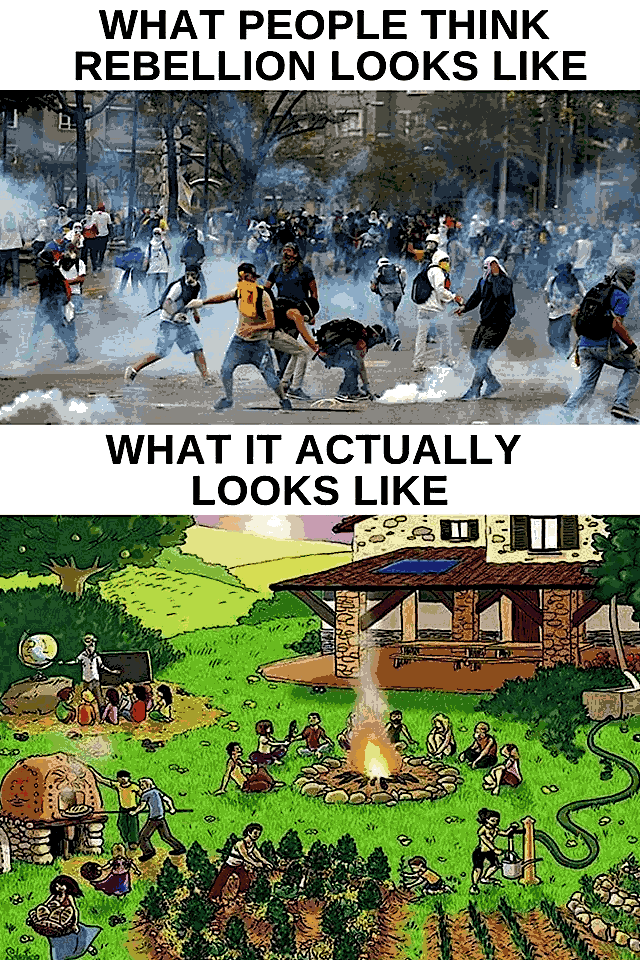
Think of the recent Extinction Rebellion or Occupy protests. They were camping on a public highway where they would ordinarily have a right of access. Amending section 61 of the CJPOA as outlined would not only ban people from private land – merely turning a civil offence into a criminal one. It would also criminalize people sitting on public land where they had a right to be.
Over the last few years local authorities have sought to restrict rough sleeping in town centres using ‘Public Space Protection Orders’ (PSPOs). These create a civil offence for anyone breaching the local authority’s order by sleeping rough.
Recently, in part due to the increase in homeless people sleeping in cars or vans, local authorities have obtained PSPOs to cover roadside lay-bys and other land which forms parts of the highway to prevent people stopping overnight. Again, this creates a civil offence, not a criminal one, for sleeping in your vehicle.
What the consultation outlined was amending section 61 of the CJPOA to allow all land along public highways to be cleared of people residing there – whether in towns or the countryside – and anyone who refused could be instantly arrested, their possessions seized, and they would then be taken to court. If they were already homeless, “of no fixed address”, that of itself could constitute a reason to hold them on remand in prison.
Point (2) in the earlier list, on “intentional” trespass, might be said to be addressed by the consultation’s proposals for section 61. It doesn’t really, since it doesn’t define the meaning of “intent”.
In law, the ‘intent’ of a homeless person sleeping on a town centre street is not the same as the ‘intent’ of protesters to set up a camp on the street. That is because, while homelessness has no protection in law, protest does.
Currently we are in the process of leaving the EU. What many Brexiteers fail to realize is that the concept of ‘human rights’, and the ‘European Convention on Human Rights’ (ECHR), is not an ‘European’ issue. The ECHR, and the Council of Europe, are a United Nations body.
Irrespective of the rights or wrongs of Brexit, the UK land lobby are using it as an excuse to extend their already near monopolistic hold over land in England and Wales (the devolved Scottish Government, as noted earlier, has a far more liberal approach to land rights). It’s not just these new proposals that seek to restrict our ability to access land. Recent changes to the law have restricted the rights of the public to register new rights of way, and protect communal land as ‘village greens’, after 1st January 2026.
In Britain it is estimated that ‘ordinary’ people – such as householders – own roughly one-twentieth of Britain’s land area. Corporations own around another fifth. Around 36,000 people, 0.5% of the population, own 50% of the land – and of those, 1,200 people mostly descended from the aristocracy still own a third.
As the recent pandemic ‘crisis’ demonstrates, what really matters in society is not the strength of the economy but our access to a reliable food supply. For the poor especially, having access to land to grow food can transform their security.
In Britain, as a result of the theft of the land almost a millennia ago and its parcelling out by the aristocracy ever since, very few people have access to land. And now that land has become a development asset, in part because ownership is so concentrated, buying a small plot of land is out of the reach of most people.
The response of people to the current ‘trespass’ proposals is generally to quibble about the rights and wrongs of ‘trespass’, or access to housing.
We disagree.
“You can’t stop a war by marching and fighting. You have to say ‘fuck it’ and walk away.”
Ken Kesey’s speech to the first Anti-Vietnam War really, University of Berkeley (1965)
As in those great words of Ken Kesey, we need to stop focusing on the agenda that is being set for us, and instead focus and work on the agenda we want to create.
What these proposals highlight is the 954-year-old history of land injustice in England; and the manipulation of the law by one small elite class to protect their exclusive right of proprietary control.
We need land occupations – not massed in one place, but many small ones all across the nation. These occupations must be peaceable, and ‘leave no trace’ when they end. There should be no vehicles, or mechanized tools, or fossil fuels. In effect, we create the kind of future model of life we want to live by, and live that… TODAY!

This should be our response: Not arguments; not a lobby; not a petition; but big giggly land occupations, where people do nothing more than sit, cook food over fires, play acoustic music, and simply enjoy a more simple ‘disconnected’ time together.
’Corona Virus’ versus ‘Universal Basic Income’ – Twin Failures of Modernity
In the wake of the pandemic, as in the wake of the 2008 Crash, neoliberal capitalists have become socialists. However, does the great idea of the left, ‘Universal Basic Income’, represent anything better?
What is ‘Anarcho-primitivism’
Anarcho-primitivism (AP) is a critical view of modern society’s origins and present-day organization based on ‘deep ecological’ principles.
From an ‘AP’ perspective the shift from subsistence to organized agricultural production gave rise to social stratification, coercion, alienation, and the exertion of ‘property rights’ by a minority over the majority.
‘AP’ advocates a transition towards simpler ways of life through deindustrialization, an ending of mass production and consumption, the abolition of the divisions of labour and economic specialization, and the abandonment of large-scale technologies.
The ‘practical’ enactment of AP comes in many forms, from foraging and community food growing to creating independent off-grid communities.
Though the details vary widely, rather than “going back” to an idealized primitive state most ‘AP’ writers consider that we have to move towards a new model for society, where our needs are met within the natural limits of local ecosystems. More critically, human society must make sufficient space for non-human species (‘non-human people’) to exist.
Writers on ‘AP’ themes come from many eras, and different parts of the political spectrum: Diogenes; Epicurus; St. Francis; Henry Thoreau; Leo Tolstoy; John Seymour; Arne Næss; Jerry Mander; Murray Bookchin; Judi Bari; Derrick Jensen; Vandana Shiva; John Zerzan; or Lierre Keith.
At the core of ‘AP’ is the idea that what sustains us is nature – and that modernity, by removing people from nature, is what makes technological society so damaging to the Earth. ‘Rewilding people’ (not just animals) is therefore the simplest means to rebalance humanity with the natural world, and protect the Earth’s ecology.
We inject a large dose of anarcho-primitivism to find out…
Corona virus disproportionately affects those with “existing health conditions”. Therefore, is the damage wrought to the global economy by the virus a sign it was pretty sick already? – and would have soon died anyway of natural causes?
Like city bankers stranded on a blacked-out tube train, neoliberal politicians have suddenly developed a flush of Keynesian socialism, throwing cash at corporations hit by the crisis. Some are even looking at the options for ‘helicopter money’ – throwing cash at ‘ordinary’ people in the hope they will spend it and keep the economy afloat.
The left’s response is generally, “we told you so”. Arguably the political right have nothing to offer – given their policies leading up to the crisis exacerbated the problems dealing with it.
On the left though one of the buzz-phrases circulating in the wake of the crisis is ‘universal basic income’ (UBI); an argument that the best solution to the coming economic slump is to give everyone an equal income and then progressively tax it back from those who earn more than that value.
UBI stems from the realization that greater automation will lead to far more people being ‘surplus’ to the economy’s needs. UBI accepts that fact, and essentially people are compensated for the failure of the economy to find them employment. In addition, of course, they would have to be provided with housing and other public services, since lack of income would preclude those amenities too.
Currently the extra costs of torturing the unemployed and disabled under the Universal Credit system in Britain actually exceed the costs of the previous benefits systems.
Again one of the strong arguments for UBI is that, by unconditionally giving people money, it probably saves much of the costs of administering benefits to those who need them.
Does that deal with our current difficulties though? Isn’t UBI a “consumerist” panacea for the complex problems of terminal neoliberalism? – paying people to keep existing within the current economic process rather than trying to fundamentally change its nature to more simply avoid that necessity?
To solve the present-day crises of capitalism governments are creating debt today that future generations will be unable to pay-off. In the same way though UBI does not actually solve any problems, it merely ameliorates the perceived problems of the economy today by paying people to be economically inactive – while compensating them with the ability to minimally consume.
“We must shift America from a needs- to a desires-culture. People must be trained to desire, to want new things, even before the old have been entirely consumed. Man’s desires must overshadow his needs.”
Paul Mazer, banker for Lehman Brothers (1930s)
At its core, UBI is a means to keep the world of affluence and mass consumption turning over; it does not seek to address inequality nationally or globally, nor does it address the choices or quality of life for those subject to it.
Perhaps this is because UBI is essentially an idea which emerges from the affluent, middle class left. Thus it suffers many of the same compromises which plague other solutions to the ‘problems’ of affluence – such as ecological damage (UBI is arguably no different to the left’s advancement of the ‘Green New Deal’ to solve climate change).
It doesn’t matter if it’s Universal Credit or UBI – being poor and marginal within an affluent society still isn’t a great state to be in.
The problem is that most ‘affluent’ people consider ‘the rich’ to be million or billionaires. For the un- or under-employed, ‘rich’ is anyone with a steady job, especially the professions that demand higher-level qualifications.
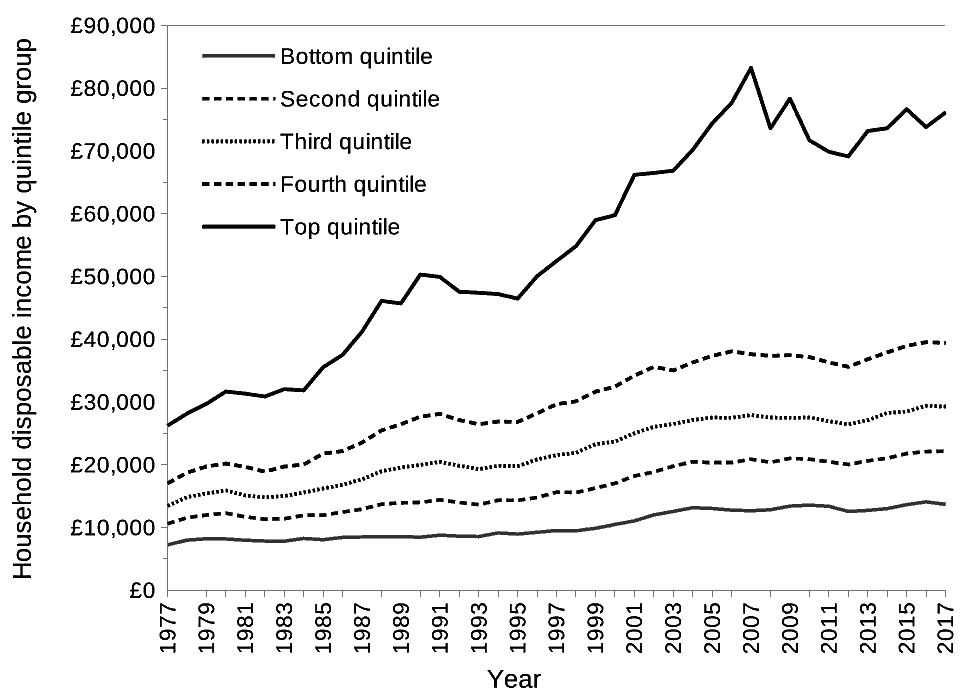
In Britain the top fifth of earners receive £80,000 or more per year (see graph, right). And if we think of who are the “middle income” group, that’s around £30,000/year.
In the past 40 years the income of the top fifth has quadrupled. The income of ‘the middle’ has doubled. For the bottom fifth their income has barely risen by a third.
It doesn’t matter whether it is Brexit, or the media’s attacks on Labour under Corbyn, that fundamental distinction between the recently affluent and the long-term poor dominates political debates – and is easily stirred by populists to poison any chance of progress.
In the great pandemics of the history the effects of illness did not discriminate, affecting rich and poor alike. Today though the current pandemic crisis does not only discriminates by race and class, as a result of existing inequalities, but in its wake those who are currently more affluent will experience a far better outcome than the poor.
For example, chances are that if you were ‘self-isolating’ and have the ability to work for home you are more affluent. Most ‘essential workers’ working in retail or logistics, and required to still go to work irrespective of the crisis, are poorer.
Also if you are more affluent, you have more disposable income as a proportion of total income, which of course cannot be spent due to the lockdown. For the poor most of their income goes on food and accommodation, which they still have to pay for irrespective of the lockdown.
Consequently when the lockdown ends, the poor will be relatively poorer than the more affluent. Additionally more people in the affluent southeast can work from home than the ‘desolate north’. The proportion of debt to earnings, and the level of savings, also is better in the more affluent south than the north, accentuating regional inequalities.
“For because of the dread that the common people have of the knights, they labour and cultivate the earth for fear lest they be destroyed.”
Ramon Lull, ‘Book on the Order of Chivalry’ (1276)
The poor – and the young – tend to work in the kinds of casual, seasonal, low-paid, and low-skilled jobs that are being eliminated as a result of the lockdown – and which are unlikely to recover quickly in its wake.
In a world where we had a UBI system in operation, would those outcomes have been any different?
Arguably not!
Debates on poverty in Britain are still based on the idea of the “deserving and undeserving poor” – from the Elizabethan Poor Law of 1601. That in turn is preserved from the English feudal order, which enshrined the well-being of the elite minority, the aristocracy, over everyone else in society (see quote above).
In Britain today a third of the land is still owned by those descended from the aristocracy. Can we not also say it is likely that our tax and benefits system is also just as biased, as a result of similar historical anachronisms, in favour of society’s top earners?
If things do not change in society – for example, the essay from William Morris earlier – then it is because the ideas for change merely contrasting one ‘group’ to another, on the basis of wealth, education, or other social distinctions.
If we want to advanced people’s ability to enjoy a rewarding, self-directed life then we should not seek to do so in terms of “past” arguments over wealth or economics.
Instead we need to provide a framework for them to access what is materially required to create a truly sustainable, productive and joyful independence existence. We must focus not on abstract measures of social order, but on the biophysical human necessities for someone to live a simple life.
Let’s advance a competing idea to UBI, based within the absolute physical assets which are the basis of a free and rewarding human existence – food and shelter:
Rather than a ‘basic income’ plus housing and other social services, let’s provide access to land and a simple shelter (or the opportunity to build one) to live within; off-grid, and with the ability to both grow food and trade any surplus, and carry out small-scale craft or technical activities to earn an external income without penalty.
For a general label, let’s call this the ‘Simple Living Model’ (SLM) – an approach which takes as its core contemporary ideas from anarcho-primitivism (see box above).
The downside of UBI is that it ‘warehouses’ the redundant population under existing models of housing, food provision, and recreation. We know that those systems are not, under current business models, ecologically sustainable – nor can they be made sustainable with the current physical systems of resource extraction and use.
SLM addresses that by creating a ‘simple’ model of living, primarily off-grid, and where most of people’s direct needs are provided for within their immediate environment – as a result of their own efforts, both collectively and individually.
Under UBI those with little employment will still have to be paid and housed. Under SLM the result is the same, except those costs would be less than having to house people in the current urban setting where land, housing, and maintenance costs are far higher.
Under UBI models people would have to be housed in high-density urban settlements, where pandemics, food shortages, or power or water supply interruptions (as climate change worsens the resilience of supply grids) would be as problematic as they are today.
In contrast, under SLM, participants would be living at lower population densities, with far less daily social interactions, which would by its nature restrict the spread of viruses. And the lower consumption under SLM, and as most needs are met directly from the immediate environment, mean that even under a national lockdown basic necessities would still be easily available.
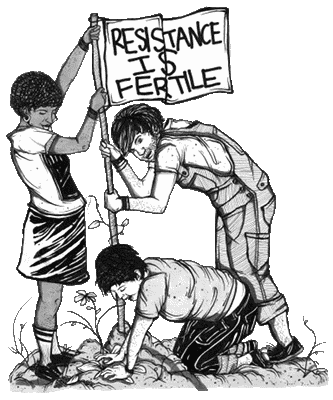
What spread Covid-19 so quickly, to such devastating effect, was hypermobilty – both internationally but also nationally.
That’s not just about long-distance travel. In Britain people are forced by economic circumstance to live up to fifty or one hundred miles away from where they work.
Solving that is not as simple as ‘local food’. We have to remove the demand for the complex supply chains that are a prerequisite of technological society. We can only achieve that by allowing people to seek an existence which enacts an alternative, ‘simple living’ mode of existence.
Numerical Ramblings: Lockdowns, Pandemic Trends, and Political Reality
A statistical editorial, presenting the trends relating infection, to death, to the current political messages on the pandemic – and what follows.
Covid-19 has become a fertile ground for conspiracy theories. If you truly believe that the affluent society is a ‘birthright’, then anything which detracts from that must be a ‘threat’. And given that humans are just so damn clever, the fact we can do nothing to stop it must prove that “those in charge” are deliberately creating the problem.
That’s the greater issue here: Covid-19 proves something that many in the affluent ‘West’ would rather ignore: Human mastery over nature is an act of hubris, not demonstrable fact.
| Assessing how bad a pathogen is: | |||
|---|---|---|---|
| How infectious? | |||
| Low | High | ||
| How lethal? | Low | (1) Not serious | (3) Not containable |
| High | (2) Containable | (4) TEOTWAWKI | |
Let’s begin by thinking how infections spread. They’re characterized by two factors: How infectious they are – how easily they spread from person to person; and, how lethal they are – of those who contract the infection, how many will die or suffer serious chronic illness as a result.
Our bodies are full of bacteria and viruses which are not very bad for us, and are not that infectious (1). Though such pathogens create problems for society – venereal diseases, for example – they do not threaten the day-to-day operation of society. Even where the pathogen is more lethal (2) – such as Ebola, or Rabies – the fact its transmission is easily contained makes it more manageable, despite its severity for the individual.
Covid-19 rates as (3). That means while it is highly infectious, and will stress the healthcare systems of the world, it is not going to lay waste to society. The Government’s own health experts recently downgraded the severity of Covid-19 because, even though it is highly infectious, it isn’t ‘that bad’; It’s not going to decimate human populations.
And (4), ‘TEOTWAWKI’?: “The end of the world as we know it”. A level of infection and lethality such that a large proportion of society dies, up-ending both the population available to work, and the skills/abilities that they have. An example of this level of pandemic would be the Black Death of 1347-51.
And yes, a (4) is still a future possibility – most likely a new or mutated viral illness.
What’s key is ‘CFR’: ‘Case Fatality Rate’.
The CFR for ordinary flu is 1%; For the 1918 Spanish Flu it was 2.5%; Smallpox was 30%; The Black Death was 60%; Ebola is 90%; Rabies is more than 99%.
At present the CFR for Covid-19 is 3% across the population, though children have a CFR of 0.001%, and for the elderly perhaps >20% – although that figure is uncertain because there has been so little testing to confirm the number of infections.
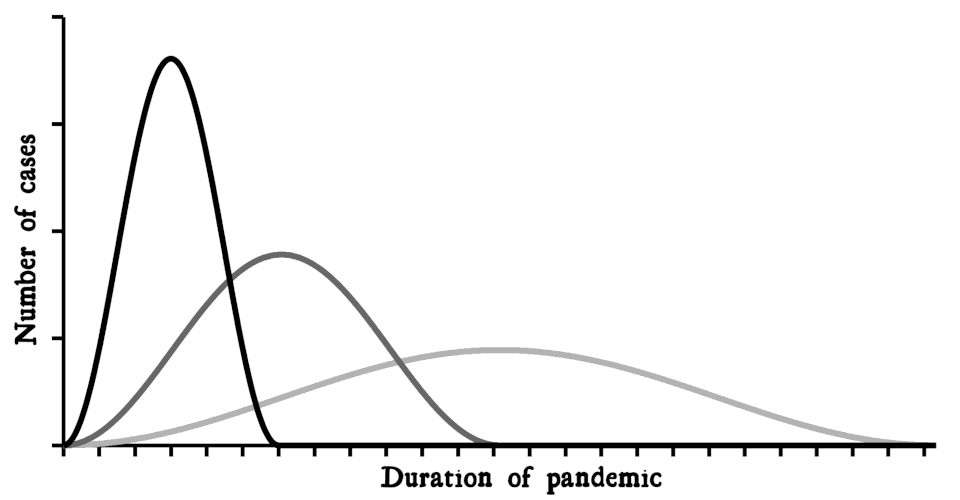
The UK Government’s strategy to minimize the impact upon society, as with government around the world, has been to introduce a ‘lockdown’. The justification for this is to “flatten the curve” of infections, ensuring that the health service can manage the number of people requiring critical or intensive care.
At the heart of the flattening the curve process is the ‘transmission rate’ (or ‘R0’):
For the usual flu, the R0 in Britain is around 1.3 – one person will infect 1.3 others, and after eight subsequent transmissions 8 people will be infected.
The R0 for Covid-19 is 2.5 – so after 8 further rounds of infection 1,525 will be infected. Covid-19’s replication is so fast that without intervention, 1 infection would within two months infect 100,000 people, leading up to 1,000 deaths.
The problem with the “flattening the curve” strategy is that it addresses the immediate problem – a spike in people needing critical and intensive care in hospital. What it doesn’t do is eliminate the virus.
Under lockdown the R0 for Britain has been estimated to have fallen from 2.5 to 0.6 – success! The problem is that once the lockdown is lifted that rate could rise sharply again within just a few weeks.
At best, with the hotter weather setting in, the transmission rate may remain low for the rest of the Summer. That will just delay the inevitable, and once the Autumn arrives the infection rate will soar.
While we try to keep infections down to a level that the NHS can treat, we are trapped within an equally problematic dilemma. Either: We keep locked down until at least June, when the weather will keep infection rates low; or we release early and let them rise; but irrespective of the length of the lockdown now, the virus is almost certain to return in the Autumn.
The Government’s initial idea of creating ‘herd immunity’, while strictly not wrong, would have resulted in a level of suffering that most people would find reprehensible.
The problem for the Government’s initial response was that to get ‘herd immunity’ requires more than 60% to 70% of the population being immune, either through: An immunization against the virus; or, catching and recovering from the virus.
With at least 18 months being required to develop and manufacture sufficient doses of a vaccine, there is no way that we can achieve herd immunity by the Autumn.
The issue the media and politicians shy away from, but the numbers clearly demonstrate, is that: We either keep a lockdown until June, and most likely have to impose again in the Autumn as transmission rates rise; or, infection rates will rise, hitting a large proportion of the population, increasing deaths.
World population is estimated at around 7.8 billion. Assuming that 60% of those are infected, and then 3% go on to die, roughly 140 million might die of Covid-19.
Every year about 55 million people around the world die – but up to a third of those deaths, over 16 million, are from ‘preventable’ causes. For example:
- Almost 8M/y (million per year) die from high blood pressure, the result of a poor environment and diet;
- While overlapping with the above, 8.8M/y are attributable to air pollution;
- Almost 4M/y die from malnutrition, and another 3M/y from a poor diet resulting in other diseases;
- 3M/y from sexually transmitted disease, mostly AIDS, Hepatitis B, and Syphilis;
- 1.3M/y from road traffic accidents.
Likewise, though estimates say 25,000 people will die from the virus in Britain, recent estimates suggest 40,000 to 60,000 a year die from air pollution. The lockdown is of course leading to cleaner air, less road accidents, and less work accidents – and so the ‘net effect’ of the virus and lockdown may not be as significant as the headline figure.
Covid-19 is serious. More serious, however, is the failure of our ‘affluent’ society to accept there are other causes of preventable death due to environmental factors which – if we put our mind to it – we could eliminate.
There are no ‘nice’ ways out of this problem. That’s why it challenges the notion as to who is “in charge” of the world. The uncomfortable reality?: It’s not “us”.
Climate change will make disease and infections more likely in the temperate zones, as tropical diseases spread. Arguably climate change is one of about a dozen factors, any one of which is likely to cause the present ‘affluent society’ to cease normal operation.
This is the true lesson we should take here:
Coved-19 is a window to the disruption that foreseeable ‘black swan events’ will cause in the future, as the Earth’s ecosystems degrade. We can change that outcome. The question is, as with lockdowns, will people accept the reality of that outcome for their future? – or will the convince themselves it’s all a conspiracy?
W.E.I.R.D.: THINKING BEYOND TECHNOLOGY – No.1, Beltane 2020
A Free Range Activism Network Publication. Download other editions of ‘WEIRD’ at http://www.fraw.org.uk/frn/weird/index.shtml. Email any comments or feedback to weird☮frăwꞏörĝꞏuk. Issued under Creative Commons BY-NC-SA-4 license; you may freely distribute.